
50 Security Guard Interview Questions and Answers
At Belfry's 2026 customer summit, we sat down with owners and operators from three security companies for an unscripted panel conversation. No script, no talking points; just real answers about what changed once they moved their business onto Belfry. Here's what they told us.
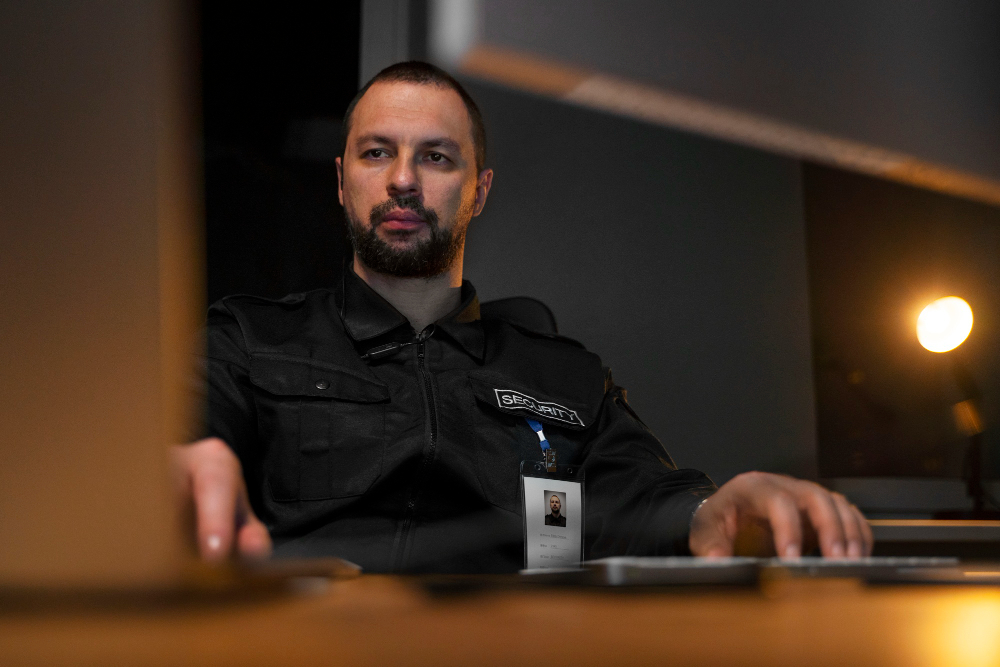
To do well in a security guard interview, you need to show more than just basic knowledge. It's important to stay calm under pressure, think clearly, and show that you care about keeping people safe.
For example, if asked, “How would you handle multiple emergencies simultaneously?” you can explain your step-by-step approach, including assessing threats, alerting authorities, and maintaining control.
This guide gives you 50 security guard interview questions and answers to help you get ready for anything that might come up.
In this article, we’ll cover:
- 50 common interview questions with answers
- Skills interviewers look for
- Helpful tips
General security guard interview questions
Job postings often use “security guard” and “security officer” to mean the same thing. If your interviewer uses either term, don’t worry; it’s the same job, and you can prepare the same way.
Most employers look for candidates who know what security guards do each day and who are honest, alert, observant, committed, and able to handle pressure. Practicing your answers can help you show that you have these qualities and more.
These basic questions can help you get ready:
1. Can you tell us about your previous security experience?
I spent the last two years as a security officer at a corporate office building downtown, covering the front desk and after-hours access control. A big part of the job was managing visitor sign-ins, issuing badges, and ensuring only authorized people got past the lobby after hours. I also did regular walk-throughs of the parking garage and stairwells, and kept a log of anything unusual for the day shift.
I handled a few tailgating attempts and one after-hours alarm trip during my time there, and I was asked to help train two new hires because of how I handled those situations.
2. What inspired you to pursue a career in security?
I’ve always liked the idea of looking out for people. My uncle was in security too, and he talked a lot about how good it felt to know you were keeping folks safe. I figured I could put my eye for detail and calm attitude to good use. Plus, I wanted something steady where I could grow and feel useful.
3. What do you think are the primary duties of a security guard?
At the retail store where I worked, my main job was walking the sales floor, monitoring high-theft areas, and checking entrances and exits throughout the shift. I logged anything unusual, like a customer acting nervous near the electronics section, and tracked who came and went after closing. Writing up incident reports was actually one of my favorite parts. It kept things organized and gave the next shift a clear picture of what happened.
4. What are your best strengths as a security guard?
I’d say my top strengths are staying calm under pressure and reading a room fast. At the hospital where I worked, things could get tense with upset family members or a patient in distress, so I learned to keep my voice low and steady and de-escalate before things got physical. I’m also good at noticing when something’s off, like a restricted door propped open or someone wandering a unit they don’t belong in.
Questions about skills and competencies for security guards
Interviewers want to know if you have the skills to handle real challenges, like resolving conflicts or managing security systems. The questions below reveal your technical abilities and quick thinking:
5. How do you stay alert and engaged during long shifts, especially during quiet periods?
I stay sharp by doing regular patrols and switching up the route a bit, so I don’t fall into autopilot. If it’s a quiet shift, I’ll double-check cameras, doors, or write notes in my log to stay busy. I also try to stay hydrated and stretch a little when I can because it helps me stay focused, especially on overnight shifts. I also go to the gym a few times a week and listen to some true crime podcasts.
6. How do you prioritize tasks when managing multiple security responsibilities?
I look at what’s urgent and what can wait. Suppose a resident calls about someone suspicious near their house; that comes first over a routine gate check. At the gated community where I worked, I handled vehicle patrols, visitor log checks, and noise complaint calls all at once some nights, so I learned to triage without dropping anything important.
7. Can you operate modern security systems like access controls, alarms, and surveillance cameras?
Yes, I’ve worked with CCTV systems, badge access setups, and alarm panels. At one site, I did hourly camera checks and responded to alarms. If something weren’t working right, I’d flag it and do basic troubleshooting, like checking wires or restarting the system, before calling it in.
8. Are you trained in first aid or emergency medical response? How have you applied it?
Yes, I have a security guard license and completed first aid training. One time, a customer fainted in a bank we were servicing. I cleared space around them, made sure they were breathing, and stayed with them until EMS arrived. I kept the scene calm and gave paramedics the information they needed.
9. How do you ensure effective communication in high-stress and high-pressure situations?
I stay calm and speak clearly, without yelling or panicking. Whether I’m using a radio or talking face to face, I stick to the facts and say what’s going on fast. If it’s a serious situation, I let my supervisor know right away and report it, so there’s a record. Everyone needs to be on the same page, especially when things go sideways.
Questions about situational judgment and problem-solving
Interviewers use situational judgment and problem-solving questions to see how you think on your feet and apply your training in real-world scenarios. They want to know if you can stay calm, follow procedures, and make smart decisions under pressure.
Here are a few questions to prepare yourself for:
10. If you witnessed an employee stealing, how would you handle it?
I’d follow store policy and loss prevention procedures. In retail security, we were trained to observe quietly, document what we saw on camera or in person, and never confront an employee directly. I’d note the time, what was taken, and who was involved, then report it to my supervisor or the LP manager and let them decide next steps with HR.
11. How would you react if a guest or visitor aggressively approached staff?
I’d step between the person and the staff to give them space, keeping my hands open and voice calm. I’d try to move the person aside by saying something like, “Let’s talk over here,” and keep my body slightly turned to avoid looking aggressive. If they kept escalating or got physical, I’d follow protocol and call for backup or law enforcement right away.
12. You hear a fire alarm go off but suspect it’s a false alarm. How do you respond?
I’d still treat it like it’s real. I’d start clearing people out right away and make sure the main exit routes are open. At the same time, I’d contact my supervisor and check if emergency services had already been called. Once everyone’s safe, I’d check with maintenance or fire services to see what caused the alarm and write up a full report.
13. Walk us through your actions if you notice suspicious behavior in a parking lot.
I’d keep my distance and watch closely first. While working retail security, I once noticed someone sitting in a car near the entrance for much longer than made sense, watching people come and go. I didn’t approach right away, just noted the vehicle, their description, and what they seemed to be watching. Once I felt sure something was off, I alerted store management and kept an eye on the entrance until it resolved. It turned out they were casing the store for a theft later that week.
14. How do you ensure your safety while confronting a potentially dangerous individual?
The first thing is keeping some space between them and me. I stay calm, keep my hands out, and talk slowly, with no sudden moves. I always try to position myself near an exit or in view of a camera if possible. If the person gets more aggressive, I back off and call for help. My job is to stay safe and keep things from getting worse.
Questions on legal and procedural knowledge
Interviewers ask questions about legal and procedural knowledge to ensure you understand the rules and limits of your role as a security guard. They want to see that you can enforce policies, follow safety protocols, and act within the law to protect people and property.
A quick note before these questions: licensing names vary by state, so the same core questions below apply no matter what your license is called. You might be working toward a Class D license in New York or Florida, a Guard Card in California, or a Level II/III/IV Personal Protection Officer license in Texas. You can check your own state’s rules with our security guard license lookup or see the full breakdown in Security Guard License Requirements by State.
Prepare yourself to answer questions like the following:
15. Tell us what you know about the legal limits of a security guard’s authority.
Security guards aren’t police. We can observe, report, and sometimes make a citizen’s arrest if we catch someone in the act, but only where local law allows it. At the corporate office building I worked, that meant holding someone at the front desk and calling the police, not physically restraining or searching them ourselves. The goal is always to prevent problems, not escalate them, unless there’s a real threat and no other option.
16. Walk us through how you would handle a situation where law enforcement needs to be involved.
If something serious happens, I make sure everyone’s safe first, then call the police right away. At the hospital, I once had to call the police after a visitor became aggressive toward staff in the ER waiting room. I stayed calm, kept a safe distance until backup arrived, gave officers a clear description of what happened, and made sure the area was secured so nothing got worse before they showed up.
17. How do you document incidents for legal purposes or company records?
I write down the who, what, where, and when just the facts, no guessing. In retail security, I logged every shoplifting incident and suspicious-activity report in detail, since those logs sometimes got pulled for police reports or insurance claims later. I learned to be specific: exact times, what was taken, camera footage timestamps, so anyone reviewing it later has everything they need.
18. How do you ensure compliance with property-specific rules and regulations?
I ask questions during training and take notes, so I don’t miss anything. Every place has different rules. I follow the property’s rules exactly, and if I’m ever unsure, I double-check with my supervisor.
Questions for behavior and personality assessment
Interviewers ask behavior and personality questions to understand how you handle challenges, interact with others, and fit into the team. They want to see if you have the right attitude, professionalism, and reliability for a role that requires trust and composure.
These questions may help you impress an interviewer:
19. How do you handle stressful situations on the job?
I stay calm by focusing on the task at hand and breaking the situation into manageable steps. I rely on my training, follow established protocols, and communicate clearly to address the issue while avoiding unnecessary escalation in any confrontations.
20. Have you ever worked as part of a team? How did you contribute to ensuring its success?
Yes, event security is almost always a team effort. At a venue I worked at, we’d have guards posted at entrances, roaming the floor, and stationed near the stage, all coordinating over the radio. I made sure I checked in on schedule, flagged anything I saw in my zone, and backed up other guards during crowd surges near the exits. It only works if everyone communicates and nobody goes quiet.
21. Walk us through a time when you took the initiative to solve an issue before it escalated.
At the office building where I worked, I noticed one of the rear stairwell doors wasn’t latching fully, so it could be propped open from outside. Nobody had flagged it yet, so I reported it to facilities right away and kept checking that door until it was fixed. It took only a day to repair, and it likely prevented an unauthorized after-hours entry.
22. How do you build trust with team members, employees, and visitors?
I show up on time, stay consistent, and treat people with respect. If I say I’ll handle something, I follow through. Even small things, like greeting staff by name or checking in during breaks, go a long way. People trust you more when they know you’re reliable and not just going through the motions.
23. What are your personal beliefs on honesty on the job?
Honesty matters more than anything in this job. If something goes wrong, I’d rather report it right away than try to cover it up. At the gated community where I worked, even something small, like missing a scheduled patrol round because of a call, had to be logged honestly so the next shift knew what was and wasn’t covered.
Questions about emergency response and crisis management
Interviewers ask these questions to see how well you do under pressure. They also want to know that you can follow safety protocols, prioritize tasks, and keep people safe in emergencies.
Prepare for these questions to show you can handle stress:
24. What is your procedure for handling medical emergencies on-site?
First, I check if the person is responsive and breathing. If not, I call 911 right away and start first aid if it falls within my training. I keep the area clear so EMS can get through fast and stay with the person to keep them calm. At the same time, I let management or my supervisor know what’s happening so they can help coordinate.
25. How do you respond when multiple emergencies occur simultaneously?
I focus first on whatever puts people in the most danger. At the hospital, I once had a combative patient situation on one floor at the same time as a fire alarm on another. I radioed for backup to handle the alarm response while I stayed with the patient situation, since that had the more immediate safety risk. Once both were under control, I wrote up full reports on each.
26. Have you ever participated in emergency drills? What have they taught you?
Yes, working events meant regular evacuation drills, especially for larger venues, covering fire, severe weather, and crowd-related scenarios. They taught me how to move a crowd calmly without causing panic, and how to find and use every exit route on a site I might only be working for one night. Drills also help you remember the plan when it’s loud, dark, and everyone’s looking at you for direction.
27. What would you do if you discovered an unattended suspicious package?
I’d clear the area, keep people back, and avoid touching the package. Then I’d report it to my supervisor or the site lead and call the police or bomb squad if needed. I’d stay nearby to guide first responders, but not get too close. Safety comes first, no matter what.
28. How would you handle a situation involving a natural disaster, like an earthquake or storm?
I’d follow company protocols right away. That usually means getting people to a safe spot or helping with evacuation. I’d stay calm and give clear directions so nobody panics. Once things settle down, I’d help check for injuries, report damage, and wait for further instructions from management or emergency crews.
Questions to assess knowledge of technology and innovation
Interviewers ask about technology and innovation to gauge your ability to use modern security tools effectively. They want to see if you’re comfortable with systems like surveillance cameras, access controls, and reporting software.
Show your confidence with technology by practicing these questions:
29. Have you worked with AI-driven security tools or smart surveillance systems?
I’ve used camera systems with motion tracking and alert features, but not the super high-end AI tools. That said, I’m comfortable learning tech. If a system flags movement after hours or alerts us to tampering, I know how to check logs and respond right away.
30. How do you handle system malfunctions in critical security tools?
First, I try simple fixes like checking power, cables, or resetting the system. If that doesn’t work, I report it right away and switch to a backup plan, like doing more frequent patrols or logging entries by hand.
31. Are you comfortable using mobile apps for tracking and incident reporting?
Yes. At events, we used a mobile app to log incidents, check in at posts, and track crowd counts by zone in real time. I got used to filing quick reports from my phone between rounds instead of waiting until after the event to write everything up from memory, which made the reports a lot more accurate.
32. How do you stay updated on advancements in security technology?
I ask questions during training, keep in touch with other guards, and look up new tools when I hear about them. Sometimes I watch YouTube videos on how new systems work or read updates from gear suppliers. I’m not the most techy person, but I do my best to keep up.
33. Can you combine new tools with existing security processes effectively?
Yes. At one venue, we switched from paper wristband checks to a scanning app partway through a contract. I helped a few newer guards get comfortable with it during a slower shift and made sure we still followed the same post orders under the new tech. If something helps us do the job better, it’s worth the adjustment period.
Interview questions for security guards on client relations and communication skills
Strong communication builds trust and helps ensure a safe, positive environment, so interviewers want to see how well you interact with people while keeping things secure. Practice with the questions below to demonstrate your communication skills:
34. How would you handle a complaint from a guest or tenant about feeling unsafe?
I’d listen carefully and take it seriously, especially in a hospital where patients and families are already stressed. I’d write it down, look into the concern, and report it to my supervisor or the charge nurse if it involved a specific unit. If I could do something right away, like walking a visitor to their car or keeping closer tabs on a waiting area, I would. People feel better when they know someone’s actually acting on it, not just nodding along.
35. How do you ensure excellent customer service while on duty?
I stay friendly, make eye contact, and try to be approachable without being overbearing. In retail security, that balance matters a lot, since you want customers to feel comfortable, not like a bouncer is watching them. I answer directions or store questions when I can, and stay visible without hovering.
36. How do you provide security updates or reports to management or clients?
I stick to the facts and write everything down clearly, including what happened, when, where, and who was involved. At the office building I worked in, property management wanted a daily shift summary, even on quiet nights, so I got in the habit of writing clear, short reports as I went instead of trying to remember everything at the end of a 12-hour shift.
37. Can you describe how you have previously mediated conflicts between guests or employees?
One time at a delivery site, two employees got into a loud argument over a late drop-off. I stepped in, got them to calm down, and reminded them we all needed to stay focused to keep the handoff safe. I didn’t take sides. I separated them for a bit, then escalated the situation to management after the shift. That helped stop things from getting worse.
38. How do you maintain confidentiality when dealing with sensitive information?
I only share information with people who need to know it. In hospital security, I had access to many sensitive situations involving patients and families, and I was trained early on never to discuss what I saw or heard outside an official report to my supervisor. That mindset carries over to every job I’ve worked since.
39. How would you handle a situation where a guest asks you to bend rules or policies to accommodate a request?
I’d be respectful, but firm. I’d say something like, “I get where you’re coming from, but I’ve got to follow the rules.” Then I’d try to help in a way that doesn’t break any policies. If I can’t decide, I’d tell them I’ll talk to a supervisor and get back to them.
40. If your workplace enacts new security policies that might affect guests, how would you enforce them without causing or escalating conflict?
I’d explain the new rules clearly and calmly. Most people are fine once they understand why the change was made. If someone gets upset, I’d stay calm and focus on safety. I’d say something like, “This is just to keep everyone safe,” and try to help them adjust without turning it into an argument.
Questions on commitment and growth
Interviewers want to understand your dedication to the role and long-term career goals. They want to see that you’re motivated to improve and eager to grow with the company. These questions can help you show your commitment and dedication:
41. How do you ensure your ongoing professional development in security?
I make it a habit to ask questions and stay curious on the job. After I got licensed, I kept looking for ways to improve, especially around vehicle patrol procedures and resident communication. At the gated community where I worked, I learned a lot from more experienced guards and picked up a few online safety courses on my own time. I’m not trying to know everything; I'm trying to keep getting a little better.
42. Are you willing to work flexible shifts, including nights and weekends?
Yes, I understand that security work often requires flexibility, and I’m fully willing to work night shifts, weekends, and holidays as needed.
43. How do you handle feedback from supervisors to improve performance? Give us an example of how you’ve applied past feedback.
I take feedback seriously. At the office building where I worked, my supervisor once pointed out that my visitor logs were inconsistent between shifts. So I started using the same format every time and double-checking badge numbers before signing anyone in. Within a few weeks, property management specifically mentioned how much cleaner the front-desk logs had gotten.
44. Where do you see your career over the next five years?
I want to grow into a lead or supervisor role, maybe training new guards or helping set up post orders for new sites. I know retail security comes with its own challenges, and I want to get good at it and help others do the same. I’m looking for steady growth, not just a paycheck.
Questions about work ethic and reliability
Interviewers ask about work ethic and reliability to see if you’re someone they can trust. They want to know you’ll do your job well and can be counted on, even during tough or quiet shifts.
Practice answering these questions so you can impress with your work ethic:
45. Can you provide examples of how you’ve gone above and beyond in your role?
At one event, I noticed the crowd was bottlenecking badly near one exit during a busy set change. I flagged it to the event lead, and we opened a second exit early, before it became a real problem. Another time, a fellow guard’s ride fell through after a late show, so I stuck around to make sure they got out safely instead of just clocking out. For me, it’s just about doing the right thing, no extra credit needed.
46. How do you handle situations where policies or procedures conflict with your instincts?
I stick to policy unless someone’s safety is clearly at risk. On a few nights on patrol at the gated community, a resident asked me to let a delivery driver in after hours without proper ID, which was against policy. I explained I couldn’t make an exception, but offered to call the resident directly to confirm before letting anyone through, which solved the problem without breaking the rule.
47. How do you maintain physical fitness and readiness for your role?
I eat mostly home-cooked meals and avoid too much junk. I go to the gym twice a week and walk or jog most days for at least 30 minutes. It helps with energy and focus. I also stretch before shifts, so I don’t get stiff on long posts or patrols.
48. How do you ensure punctuality and dependability across varying shift schedules?
I set alarms ahead of time and gave myself a buffer to get ready, especially for the overnight patrol shifts at the gated community where I worked, since being even a few minutes late meant the outgoing guard couldn’t leave. I also keep a backup plan, like setting out my uniform the night before, so I’m never scrambling. I’d rather show up 15 minutes early than even a minute late.
49. Have you ever had to fill in at the last minute? How did you handle the transition?
Yes, a few times. Once I got a call an hour before a shift because someone got sick. I threw on my uniform, showed up early, and asked the site lead for a quick rundown. I read through the post orders, double-checked camera spots, and got to work. You have to stay flexible and ask the right questions.
50. How do you ensure you remain in good enough mental health to perform your duties safely and reliably?
I try to keep a solid routine, eat decently, sleep well, and spend time with family or friends on my days off. I’ve also got hobbies that help me unwind, like fishing or watching football. If something’s bothering me, I talk it out instead of letting it build up. A clear head helps me do my job right.
What security guard skills are interviewers looking for?
Interviewers don’t want to hire someone to stand watch. They want a professional who can think on their feet, communicate effectively, and handle challenging situations with confidence.
Security firms profit most from security guards who combine technical knowledge, practical skills, and a calm demeanor to protect people and property.
Here are some of the key skills that can make you stand out as a security guard:
- Observation: You’ve got to keep your eyes open and notice when something’s off, like someone acting strange, a door left open, or a weird noise in the back lot. Small things can turn into big problems if you miss them.
- Quick thinking: Things don’t always go by the book. You might need to decide fast. Do you step in, call someone, or hold back and observe? Good guards don’t freeze; they think it through and act smart.
- Communication: Whether you’re writing a report or talking to an upset customer, you’ve got to be clear and calm. How you talk can fix a problem or make it worse, so being solid with your words matters.
- Conflict resolution: You’ll deal with folks who are angry, drunk, or just plain difficult. Knowing how to talk them down without making things worse is a big part of the job.
- Physical fitness: You don’t need to be a bodybuilder, but you do need to be able to stand, walk patrols, and respond fast if something goes down. Being in decent shape helps a lot.
- Tech know-how: Cameras, badge readers, and alarm systems are tools you’ll probably use on the job. If you can handle basic troubleshooting or system checks, that’s a big plus.
- Legal awareness: You don’t need a law degree, but you should know the rules. Things like when you can stop someone, what counts as trespassing, and how to write up an incident properly.
- Customer service: A lot of security work is about dealing with people. Whether it’s greeting guests or answering questions, you’ve got to be polite but firm. You’re the face of the site as much as the guard.
- Teamwork: Even if you’re posted alone, you’re part of a bigger crew. You need to check in, back each other up, and hand off info between shifts so nothing gets missed.
- Integrity: This one’s big. People are trusting you with their business, their property, and their safety. You’ve got to be dependable, honest, and do what’s right even when no one’s looking.
Tips on preparing for your security guard interview
A security interview isn’t about giving perfect answers. It’s your chance to show you’ve got good instincts, a solid work ethic, and that you know how to handle tough situations without losing your cool. Here are some security guard interview tips to help you get ready and walk in with confidence:
- Learn about the job: Look up the company and the kind of site they’re hiring for, whether that’s retail, event, construction, or something else. Try to picture what a typical shift might look like. That way, you can talk about how your experience fits their needs.
- Think about your past jobs and be ready to share real examples of how you handled conflict, emergencies, or anything suspicious. If it helps, use the STAR method: describe the situation, what needed to be done, what you did, and the outcome.
- Know the basics: Refresh yourself on security rules like trespassing laws, what you’re allowed to do in an emergency, and when to call law enforcement. You don’t need to sound like a lawyer; show you understand your limits.
- Talk about your full skill set: Show the full picture. Mention the hands-on stuff like cameras, patrols, and alarms. Mention the people's side too, like communication, helping guests, or staying calm when things get tense.
- Practice out loud: Go over questions with a friend or record yourself. It helps you find your words and keeps you from freezing up during the real thing.
Questions to Ask in a Security Guard Interview
A good interview goes both ways. Asking the right questions shows you’re serious about the role and helps you decide whether the job is the right fit.
Here are a few worth asking before you accept an offer:
- What does a typical shift look like for this post?
- What training will I receive before my first solo shift?
- What equipment and uniform will I be issued?
- How are schedules set? Are shifts fixed or do they rotate?
- What does the advancement path look like for someone who performs well?
- What are the most common situations I’d need to handle at this site?
- How does the team communicate during a shift?
- What does a successful first 90 days look like in this role?
Frequently Asked Questions
Do you need experience to become a security guard?
No. Most entry-level security guard jobs don’t require previous experience, but you usually need a high school diploma or equivalent and a clean background check. Some employers offer paid training. Experience in customer service, the military, or law enforcement can help, but it’s not required.
What should I wear to a security guard interview?
Dress like you’re already representing the company on a shift: business casual is a safe bet, even if the job itself is uniformed. A clean, pressed outfit shows you take the role seriously and pay attention to detail, which is exactly what the interviewer is evaluating.
How long does a security guard interview usually take?
Most security guard interviews run 20 to 45 minutes, depending on the company and role. Expect it to run longer if the position requires additional screening, like a working interview, a skills assessment, or a same-day background check kickoff.
Will I need a background check or drug test?
Almost always, yes. Most security companies run a criminal background check as a condition of employment, and many also require a drug test, especially for armed or licensed positions. Requirements vary by state and employer, so ask directly during the interview if it isn’t covered.
What license do I need before I can be hired?
That depends on your state. For example, you might need a Class D license in New York or Florida, or a Guard Card in California. Some employers will hire you first and help you get licensed, while others require it before you start. Check your state's requirements with our security guard license lookup before you apply.
Are security guard interview questions the same at every company?
The main questions are usually the same. You can expect similar topics about your experience, judgment, and how you would handle different situations, no matter where you apply. The details may change depending on the job. For example, retail jobs focus more on loss prevention, while corporate buildings ask more about visitor management and access control.
Mistakes to Avoid in a Security Guard Interview
- Showing up in casual clothes — dress as if it’s already a client-facing shift.
- Giving vague answers to scenario questions — always walk through what you’d actually do, step by step.
- Forgetting to ask questions at the end — it signals genuine interest.
- Overstating your authority — interviewers want guards who know the limits of their role.
- Not knowing your own license status — confirm your credentials are current before the interview.
Next steps with a top security management app
So, you’ve taken the step of preparing for the security guard interview questions you may get during the hiring process. What now?
Familiarizing yourself with security guard software like Belfry could give you a leg up on the competition.
Belfry is an all-in-one platform that helps business owners, security companies, and security guards like you establish well-rounded security strategies and execute them cleanly. Here’s how:
- SMS schedule confirmations: Belfry ensures you never miss a shift by sending you schedule confirmations via text message.
- Automated communications: Belfry keeps everyone in the loop with instant text updates, so you never miss anything important.
- Easier incident reporting: The Belfry mobile app makes it easier to send in your incident reports digitally; no pen and paper needed!
- Worry-free paydays: Belfry’s payroll systems integrate with everything else, so you won’t have to worry about getting your salary on time.
See how Belfry makes the job easier for you. Schedule a Free Demo Today.

